“The Holes Was Eaten By Rats …”
Hudson Family Tree
My English & Irish ancestors were early settlers in Australia & New Zealand and included families Hudson, Goddard, Askew, Dunstan, Bolitho, Clarke, Stelfox, Douglas and Cuttle.
Researched and written by Russell Hudson, with Jenny Hudson’s family pages, between 2005 and 2013. From 2026 the site is maintained by his grandson, George Robertson.
Read the story, family by family
Start with any family. Every page ends with Next, so you can read straight through.
Or look someone up
Russell Hudson’s Home Page
My Anglo-Irish Ancestors
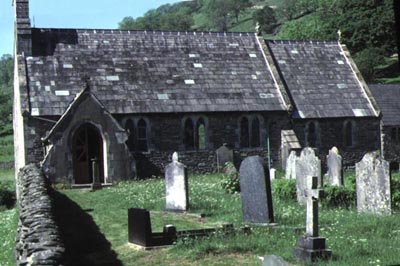
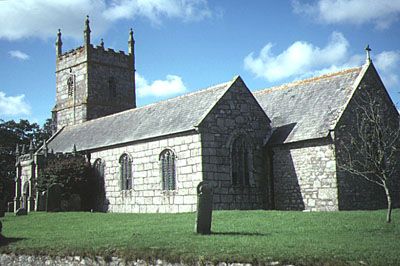
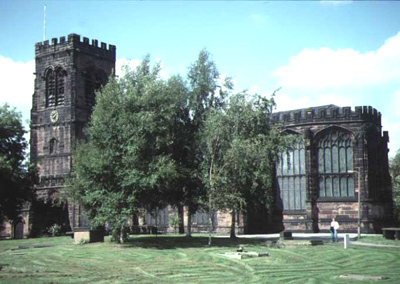
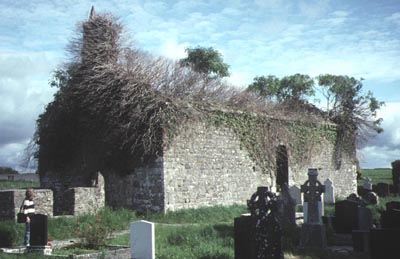
My ancestors migrated from England and Ireland to Australia and New Zealand during the mid to late 1800s. They came from farming communities in Westmorland (Hudson), Hampshire (Goddard) and Derbyshire (Askew); from mining and farming families in Cornwall (Dunstan and Bolitho); from Cheshire via the textile mills of Russia (Clarke and Stelfox), from post-famine subsistence farming in Roscommon (Cuttle and Ekins), and from mills south of Londonderry (Douglas).
This site has been established to give descriptions of their lives in England and Ireland, to record the circumstances of their migration and describe their lives in the colonies, and to list their many hundreds of descendants.
Descriptions are presented in four groups, under family headings: Hudson (comprising the immigrant families Hudson, Goddard and Askew), Dunstan (Dunstan, Priske and Bolitho), Clarke (Clarke and Stelfox) and Cuttle (Cuttle, Ekins and Douglas).
What Holes and Which Rats?
Cross-stitch Sampler Made by my Great-great Grandmother Mary Askew (1820-1890)
The sampler was made in 1831 when Mary Askew was 10 years old and living in Higham, Derbyshire with her father Thomas, the village blacksmith, and his second wife Elizabeth. Mary brought the sampler to Australia in 1852, when she and her half-brother Thomas Askew came to Victoria as assisted immigrants on the sailing ship "Sir Robert Sale". Mary married James Goddard in 1853 and her daughter Mary Jane Goddard, my great grandmother, was born near Pollocksford on the Barwon River later that year. At age 20, near Smeaton, Victoria, Mary Jane married the 45 year-old bachelor farmer William Hudson, previously of Longsleddale, Westmorland. The marriage produced seventeen children and established the Australian line of my Hudson family.
(Photograph God-fam-018, Russell Hudson, 1988).
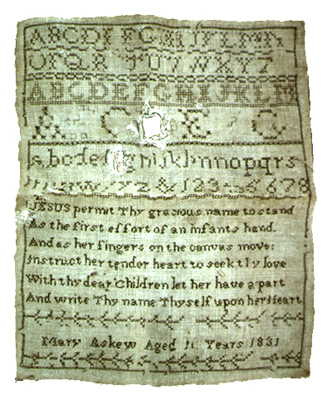
My great-great grandmother Mary Askew (1820-1890) was the second daughter of Thomas Askew, the village blacksmith in the small Derbyshire market town of Higham. Her mother, Rebecca McNell/Askew, died in 1822 at the age of 26 years, leaving her daughters Mary, almost two years old, and Sarah, aged about three. Her father re-married and he and his second wife, Elizabeth, had a further six children, half-brothers and half-sisters to Mary and Sarah. In 1831, at the age of ten years, Mary Askew made the cross-stitch sampler illustrated on this page; it became one of her treasured possessions. "Click on the sampler" to see an enlarged image; click "back" to return to this page.
In 1852, Mary Askew, age 32 years, and her younger half-brother Thomas left England for Australia as assisted immigrants on the sailing ship “Sir Robert Sale”. Among her few belongings on the voyage was the sampler which, on arrival at Point Henry, near Geelong in Victoria, looked somewhat worse for wear, containing a number of ragged holes. The story passed down through her descendants was that “the holes was eaten by rats” during the three-month voyage to Australia.
Mary Askew was contracted to work for a James Riley near Pollocks Ford on the Barwon River, to the west of Geelong. Here she met her future husband James Goddard of Hampshire. In 1845, young James Goddard, at the time married and with two young children, received a ten-year sentence for stealing a clock. He had served two years of that sentence at Millbank and Pentonville, when he and other "good behaviour" inmates were selected to receive a Royal Pardon, conditional on being transported to Australia and remaining in the colony for the unexpired period of their sentences.
James and Mary set their wedding date for 6 January 1853, at Christ Church, Geelong, and were delighted to know that among the witnesses would be Mary's half-sister Ann Askew who, with her new husband William Siddall, had also decided to migrate from Derbyshire to Australia. Sadly, soon after the wedding ..........
But, hang on, I'm into the story and I haven't even introduced myself!
Hello and Welcome to the Site
Thank you for visiting my family history site. My name is Russell Hudson and I am a descendant of English and Irish immigrants, all of whom made their way to Australia and New Zealand during the mid to late 1800s. I was born in Kalgoorlie, Western Australia in the year 1939, the first son of "goldfields-born" parents. Their parents (my grandparents) had been attracted by the employment opportunities generated by the discovery of rich gold deposits in and around Coolgardie and Kalgoorlie, and arrived in the late 1890s and early 1900s. They left their immigrant parents and grandparents, and some of their brothers and sisters, in the Clunes district of Victoria, and in the Waihi and Dunedin districts of New Zealand, to make a new life for themselves and their families in Western Australia.
The story involving Mary Askew and the sampler is typical of the many incidents, adventures, triumphs and tragedies that affected the lives of immigrants to Australia and New Zealand during the nineteenth century. On this web site I have started to record some of the events in the lives of my forebears - before they left their communities in England or Ireland, during their long voyage to Australia or New Zealand, and through their years as early settlers to the colonies. I have also commenced the compilation of lists of many of the descendants of these settlers, an imposing list of Aussies and Kiwis with whom I share some common English and Irish ancestry. These descendants are now scattered throughout Australia and New Zealand and some, indeed, have even moved back "overseas”.